Durable assistant task lifecycle
SQLite-backed assistant tasks, dependency edges, retries, cancellation, blocked-state propagation, and run history.
agent-hub gives a single operator a concrete control surface for multi-project code-assistant workflows: queue coding tasks, route them into repo-local agents, model dependencies, track blocked work and retries, surface human handoff, and inspect the whole system through CLI, HTTP, JSON, and a thin dashboard.
The current release focuses on the pieces you need before layering on bigger assistant systems: durable queue state, dependency handling, project routing, and thin operator visibility.
SQLite-backed assistant tasks, dependency edges, retries, cancellation, blocked-state propagation, and run history.
Route coding work into reusable project-backed agent commands and instantiate bounded multi-step flows.
Use CLI commands, JSON endpoints, a minimal HTML page, and the thin browser app at /app.
Surface needs_human, notes, and labels so unresolved work does not disappear inside automation.
Create saved queries for tasks and pipeline runs, then execute them later from CLI or HTTP.
Keep the repo easy to audit while preserving room to extend executors, policies, and integrations.
| Primary role | A multitask board for code assistants working across local repositories. |
|---|---|
| Main user | One operator who wants to supervise many coding tasks through one assistant-facing surface. |
| Main targets | Repo-local tools such as Codex, Claude Code, Kimi Code, or Qwen Code launched through controlled wrappers. |
| Main value | Queueing, routing, dependency control, retries, blocked-state visibility, and human handoff. |
| Interaction model | You mainly talk to your assistant. The assistant places and inspects tasks through the board. |
The same system is available through scripts, HTTP, and a thin browser UI. Use the surface that matches the job without changing the underlying queue model.
Create tasks, run templates, dispatch queues, inspect inbox state, and export snapshots from scripts or shells.
Drive task creation, querying, inbox views, pipeline runs, and dashboard snapshots through a small JSON surface.
Use the HTML page and browser app for lightweight triage, visibility, and manual intervention without heavy frontend machinery.
A high-fidelity preview based on the real /app layout, populated with representative queue, inbox, pipeline, and saved-query data.
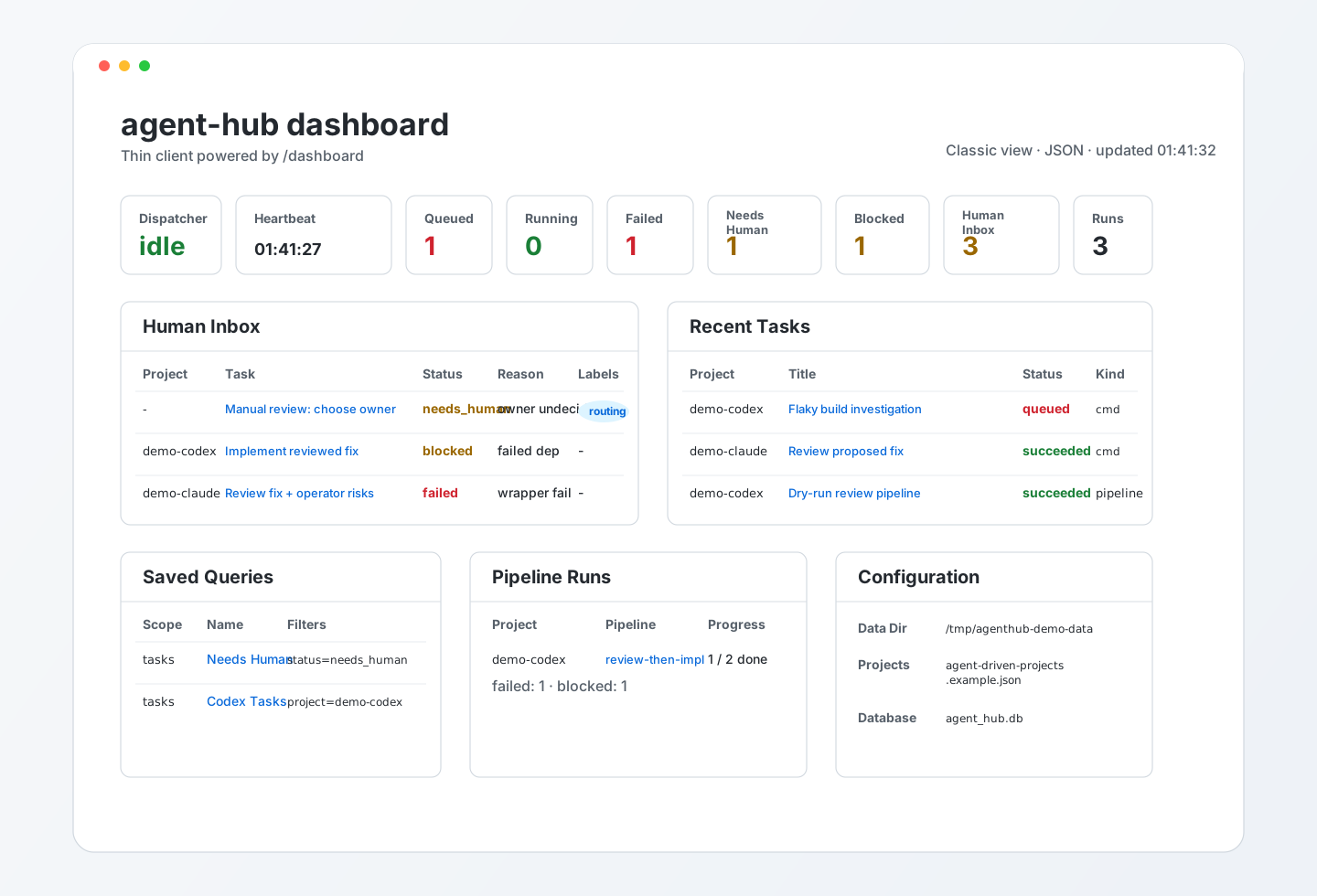
agent-hub works best when one operator needs one control surface for many local repos and bounded code-assistant tasks.
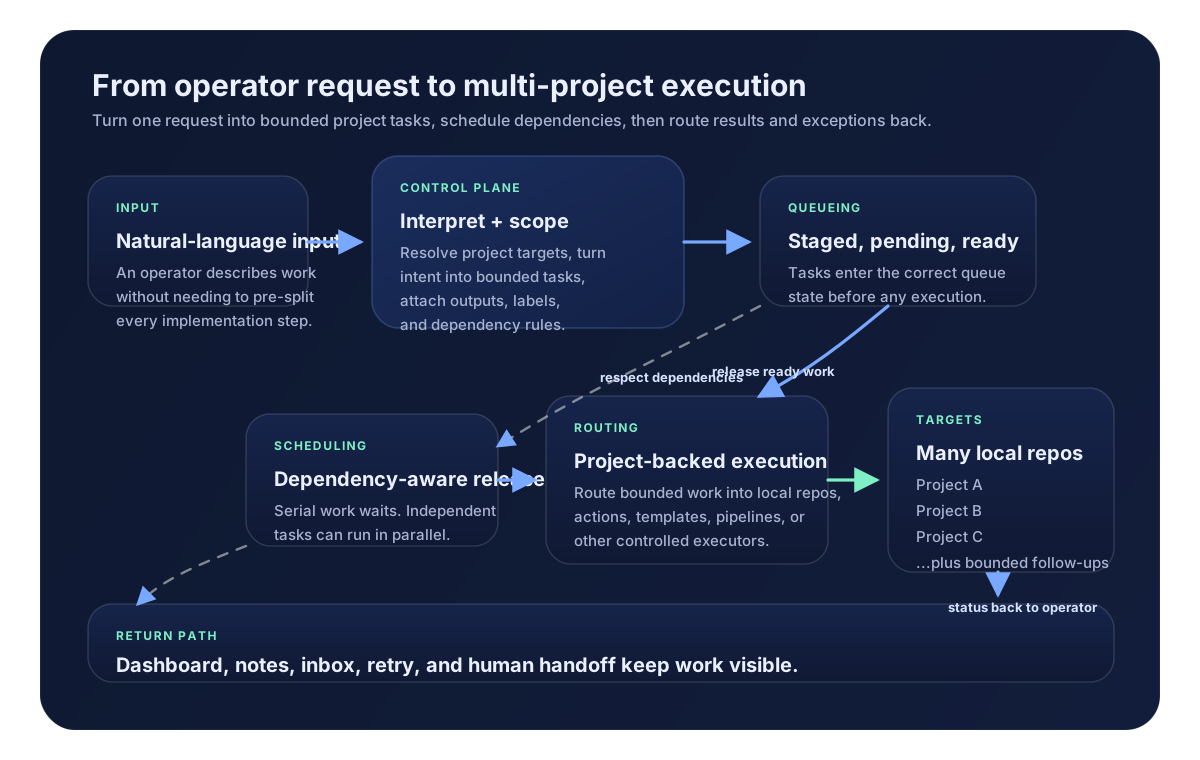
Accept natural-language intent, map it to a target project, and launch a bounded assistant task with explicit deliverables.
Model dependencies when one task must wait, while still allowing unrelated work to run in parallel.
Run as much as possible automatically, then stop clearly when a hard case needs manual review.
The best current usage pattern is to use agent-hub as a multitask board in front of your existing repo-local coding agents instead of trying to replace them.
Run agent-hub as the queue, routing, dependency, and visibility layer that the operator talks to directly.
Let Claude Code, Codex, Kimi Code, or Qwen Code stay inside the target repo through wrapper scripts or local command entrypoints.
Register repo-agent pairs as projects, then create bounded tasks or templates that forward free-form prompts into those local executors.
This is the most natural fit for the public MVP: one operator surface, many repos, explicit dependencies, and coding agents launched through controlled local commands.
The control-plane value is not just execution. It is the normalization step: convert a vague coding request into explicit project targets, bounded assistant tasks, and dependency-aware scheduling.
The implementation is deliberately plain: small modules, explicit storage, and a dependency graph you can reason about.
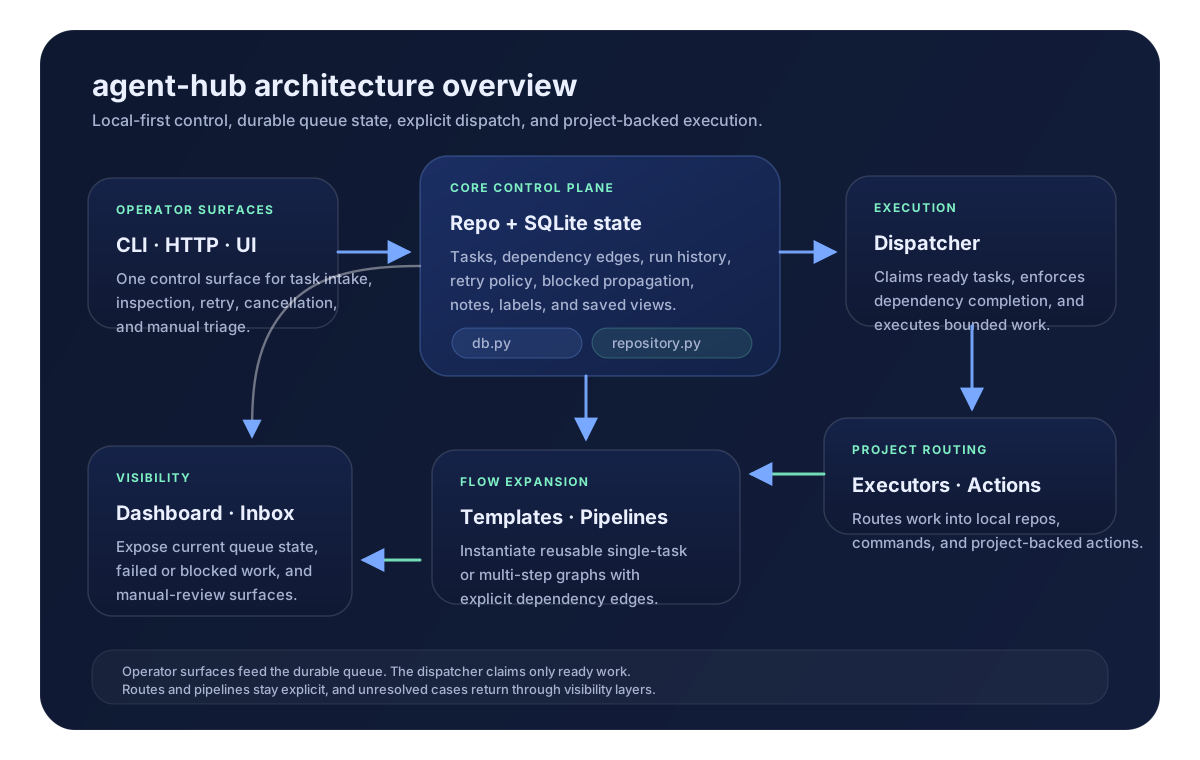
db.py bootstraps local SQLite staterepository.py manages lifecycle, edges, and block propagationdispatcher.py claims and executes ready tasksweb.py exposes health, status, task, inbox, and dashboard surfacesservices/executors.py routes project-backed commandsservices/pipelines.py expands pipeline templates into task graphsThe system keeps the workflow small: define work, dispatch only ready tasks, and surface exceptions for operator action.
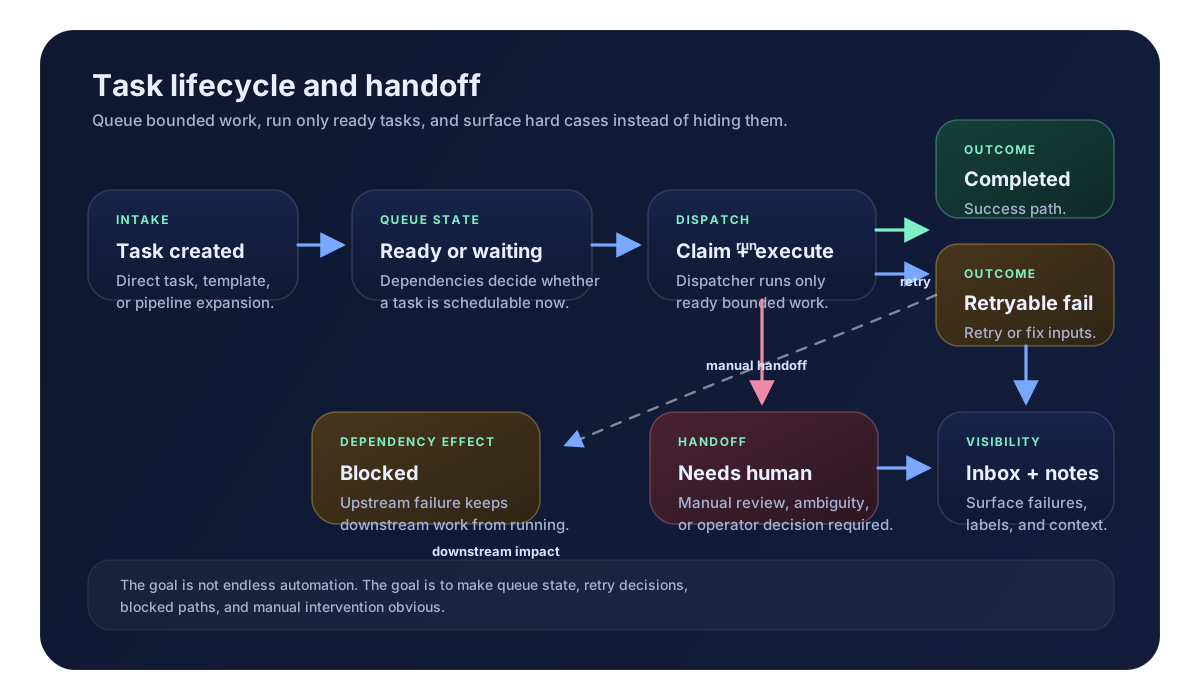
Queue a direct task or instantiate a reusable task template or pipeline from the project registry.
The dispatcher claims only ready tasks and respects dependency completion rules before execution.
Inspect snapshots, labels, notes, and the human inbox to retry, cancel, or hand work back to a person.
Start the web surface, run the dispatcher, queue assistant work through repo-local wrappers, then open the dashboard and browser app.
python -m agent_hub --projects-file examples/agent-driven-projects.example.json serve --port 8080
python -m agent_hub --projects-file examples/agent-driven-projects.example.json dispatch
python -m agent_hub --projects-file examples/agent-driven-projects.example.json run-task-template demo-codex delegate-task --input "Investigate why the local build script is flaky"
python -m agent_hub --projects-file examples/agent-driven-projects.example.json run-pipeline demo-codex review-then-implement --input "Add a dry-run mode"
python -m agent_hub --projects-file examples/agent-driven-projects.example.json list-human-inbox
python -m agent_hub --projects-file examples/agent-driven-projects.example.json dashboardA board that routes bounded assistant tasks into repo-local wrappers, plus a human inbox, saved queries, and a read-only dashboard snapshot.
Not a hosted SaaS, not a multi-tenant engine, and not a polished production UI. The point is a small, extensible OSS baseline.
Use the browser-friendly demo page for the full step-by-step local flow.
Start with the repo, then use the release and demo pages to understand the current MVP slice.
Browse source, tests, templates, docs, and governance files.
DocsStep through the browser-friendly local walkthrough for the current OSS MVP.
中文用中文查看当前 OSS MVP 的本地演示流程。
ReleaseReview the first public release and the current baseline scope.
agent-hub is useful when you want explicit code-assistant routing and operator visibility today, while leaving room to grow into stricter policies and richer integrations later.